The $3 billion crisis hiding in plain sight
Documentation processing delays alone cost the global shipping industry $3 billion annually, with dangerous goods operations representing the most critical and vulnerable segment of this massive inefficiency. For shipping lines operating in today's hyper-competitive environment, dangerous goods processing represents far more than an operational challenge. It is a strategic vulnerability that directly impacts profitability, safety, regulatory compliance, and market position.
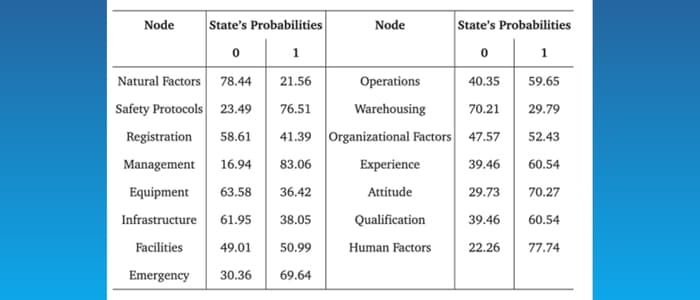
Research reveals that 34% of dangerous goods shipments have compliance deficiencies during inspections, while hazardous cargo operations face a 21.56% accident probability under normal conditions. These statistics represent not just operational failures, but existential threats to shipping line viability in an industry where a single major incident can cost hundreds of millions in penalties, cleanup costs, and reputational damage.
A study of 348 accidents between 1990 and 2018 identified human and management factors as carrying the highest probability of an accident. The registration and management probability in particular is exactly the portion that AI automation can minimize.
When customer demands meet regulatory requirements
The maritime industry operates under a fundamental tension: customers demand immediate responses to booking requests, while dangerous goods regulations require thorough, careful evaluation of complex safety and compliance factors.
Consider an all-too-common scenario: a pharmaceutical company submits an urgent dangerous goods booking request on Friday afternoon for time-sensitive medical supplies. Under traditional manual processes, that request sits unprocessed until Monday morning, while the shipping line loses a high-value customer to a competitor with faster response capabilities.
This operational pattern creates cascading business problems:
- Revenue hemorrhaging: lost bookings due to delayed responses during weekends, holidays, and off-hours.
- Compliance exposure: manual processing increases error probability, with each mistake potentially triggering regulatory investigations and penalties.
- Safety risks: processing errors in dangerous goods create potential maritime disasters.
- Customer defection: shippers increasingly select carriers based on response speed rather than price or route coverage.
- Scalability barriers: manual processes cannot scale with growing DG volumes or increasing regulatory complexity.
Navigating dynamic and complex regulatory requirements
Modern shipping operations must navigate an increasingly complex web of dangerous goods regulations: the IMDG Code, SOLAS Chapter VII provisions, MARPOL Annex III requirements, and numerous port-specific restrictions that evolve continuously and require specialized expertise to interpret correctly.
McKinsey research demonstrates that AI and automation technologies have the potential to automate up to 70% of current maritime activities, yet dangerous goods operations remain trapped in manual processes designed for a pre-container era.
Current DG desk operations in many shipping lines still rely on email-based workflows with manual review and data extraction, reference-based evaluation against printed or PDF regulatory documents, sequential approval processes across departments, and scarce, expensive expert knowledge concentrated in a handful of specialists. Each of these creates bottlenecks, single points of failure, and opportunities for human error.
IMO inspection data shows that 34% of dangerous goods shipments have deficiencies, demonstrating the difficulty of maintaining compliance through human-dependent processes. A typical booking evaluation spans regulatory compliance, vessel compatibility, port requirements, dynamic stowage and segregation, and documentation standards, all interconnected, and all currently resolved through time-consuming manual research.
Case study: the breaking point
An established Middle East based shipping line approached Solverminds after recognizing that its DG desk was overwhelmed. Booking volumes had outgrown the team's capacity to approve and accept requests at the speed customers demanded, and the current approach had become unsustainable.
The company was experiencing DG booking response times extending well beyond customer expectations, particularly during weekends and holidays; processing errors resulting in customer complaints and regulatory scrutiny; staff burnout from overtime to handle DG processing outside business hours; inability to scale for seasonal volume increases; and inconsistent service levels across time zones.
During peak periods, response times could extend beyond 48 hours, causing some customers to select competitors solely based on faster approval capabilities. The choice was clear: transform operations through automation or accept declining market share in this high-value segment.
The solution: ASTRA DG Bot
Rather than attempting to solve capacity constraints through additional staffing, where the real challenge was finding qualified, experienced resources at all, the shipping line implemented Solverminds' ASTRA DG Bot, an AI-powered solution that automates and enhances dangerous goods processing workflows.
ASTRA DG Bot combines deep regulatory expertise with advanced automation, acting as an intelligent assistant to DG desk teams rather than a replacement. Its core capabilities:
- AI-driven data extraction: processes incoming DG booking emails and attachments, extracts cargo details from safety data sheets and declarations, communicates with customers to request missing information, and cross-references everything against multiple databases.
- Compliance validation engine: validates against current IMDG Code standards, SOLAS Chapter VII, MARPOL Annex III, vessel Document of Compliance status, port-specific restrictions, and company risk parameters, with continuously updated regulatory data.
- Workflow automation: processes routine approvals end to end, updates customers with DG approval numbers and booking confirmations, and routes complex or unusual cases to human experts.
- ERP integration: connects with the Liner ERP for automatic booking creation, accesses live vessel schedules and routing data, and maintains detailed audit trails of every decision.
- Knowledge support: answers routine queries on port procedures, documentation requirements, regulatory updates, and booking status.
Implementation results
Following implementation, the shipping line achieved transformational improvements across all key performance metrics:
“ASTRA DG Bot has fundamentally transformed our dangerous goods operations from a manual bottleneck into a competitive weapon. We now respond to DG bookings faster than any competitor while maintaining perfect regulatory compliance. (Operations Director, Middle East based liner company)”
- Processing time: response times decreased from an average of 48 hours to approximately 10 minutes for routine bookings.
- 24/7 global availability: customers receive responses at any time, in any time zone, eliminating weekend and holiday delays.
- Accuracy: automated compliance validation reduced processing errors by over 90%.
- Service consistency: standardized processing across all customer interactions and geographic regions.
- Staff productivity: DG desk teams focus on complex analysis and customer relationships rather than routine processing.
- Scalability: volume increases are handled without proportional staff increases, enabling profitable growth.

What to look for in a DG automation platform
The maritime automation market, valued at $6.06 billion in 2023 and growing at 8.9% annually, reflects industry recognition that such solutions are becoming essential for competitive survival. ASTRA DG Bot exemplifies the capabilities shipping lines should consider when evaluating automation:
- Advanced AI and NLP: document intelligence across languages and formats, reinforcement learning that improves with every case, and professional conversational AI.
- Regulatory intelligence: current IMDG Code, SOLAS, and MARPOL data via compliance platforms, a global port restrictions database, vessel DOC validation, and customizable company carriage policies.
- Enterprise integration: API-based architecture, real-time data exchange, Liner ERP integration, and performance analytics.
- Transparency: detailed audit trails including how each email was parsed, intelligent exception routing, and customizable approval workflows.
Implementation best practices
Based on successful implementations across multiple shipping lines, several factors contribute to effective DG automation: document all existing processes and policies before automation begins; combine AI capabilities with human expertise for complex cases; test thoroughly with historical data and edge cases before going live; establish continuous improvement based on performance data; and help teams transition from manual processing to exception management and enhanced customer service roles.
Why C-suite executives should prioritize this
For senior maritime executives, ASTRA DG Bot is more than an operational improvement. It creates immediate competitive differentiation through superior response times; handles growing volumes without proportional staffing costs; reduces regulatory violations while maintaining comprehensive audit trails; eliminates overtime costs for after-hours processing; demonstrates innovation leadership that attracts customers and talent; and delivers the 24/7 service quality that supports premium pricing in the dangerous goods segment.
Looking ahead, DG regulations will keep evolving, customer expectations for immediate response will keep rising, and dangerous goods volumes will keep growing as pharmaceuticals, lithium batteries, and chemical products expand. Automated systems adapt to these shifts faster than manual processes ever can, and reinforcement learning means ASTRA can be taught evolving rules and changes to DG operations.
From operational liability to strategic asset
The mathematics of this transformation are compelling: ASTRA DG Bot implementations typically achieve return on investment within 4-6 months through reduced processing costs, increased booking capture, and improved customer retention. More importantly, these systems create sustainable competitive advantages that strengthen over time as AI algorithms learn and improve while competitors remain constrained by manual process limitations.
For companies competing in global dangerous goods markets, the question is not whether AI automation represents good value. It is whether they can afford to compete against carriers who have already automated while they continue manual processing.
ASTRA DG Bot combines the speed and consistency of artificial intelligence with the judgment and experience of maritime professionals. The time for incremental improvements has passed. The market now demands transformational change, and the technology to deliver it is available today.